
You open Revit thinking today is a “small update day.” Next thing you know, your client has emailed asking you to rework the casework because they decided to change the owner‑provided kitchen equipment. Three hours later, you’re checking clearances against new cut sheets, chasing down the plumbing engineer to make sure they know floor drains need to move, and updating sheets that were already issued.
No one said the change was going to take up your entire day. No one mentioned extra compensation.
“It’s no big deal,” right?
“Just a casework change.”
That’s scope creep, and it’s one of the fastest ways architects end up exhausted, underpaid, and frustrated.
Left unmanaged, scope creep can strain client relationships, erode profitability, and put architects in difficult positions during construction. Managed well, however, change can be documented, evaluated, and aligned with project goals.
Understanding how scope creep shows up in both the design and construction phases is essential to protecting your work, your time, and your firm.
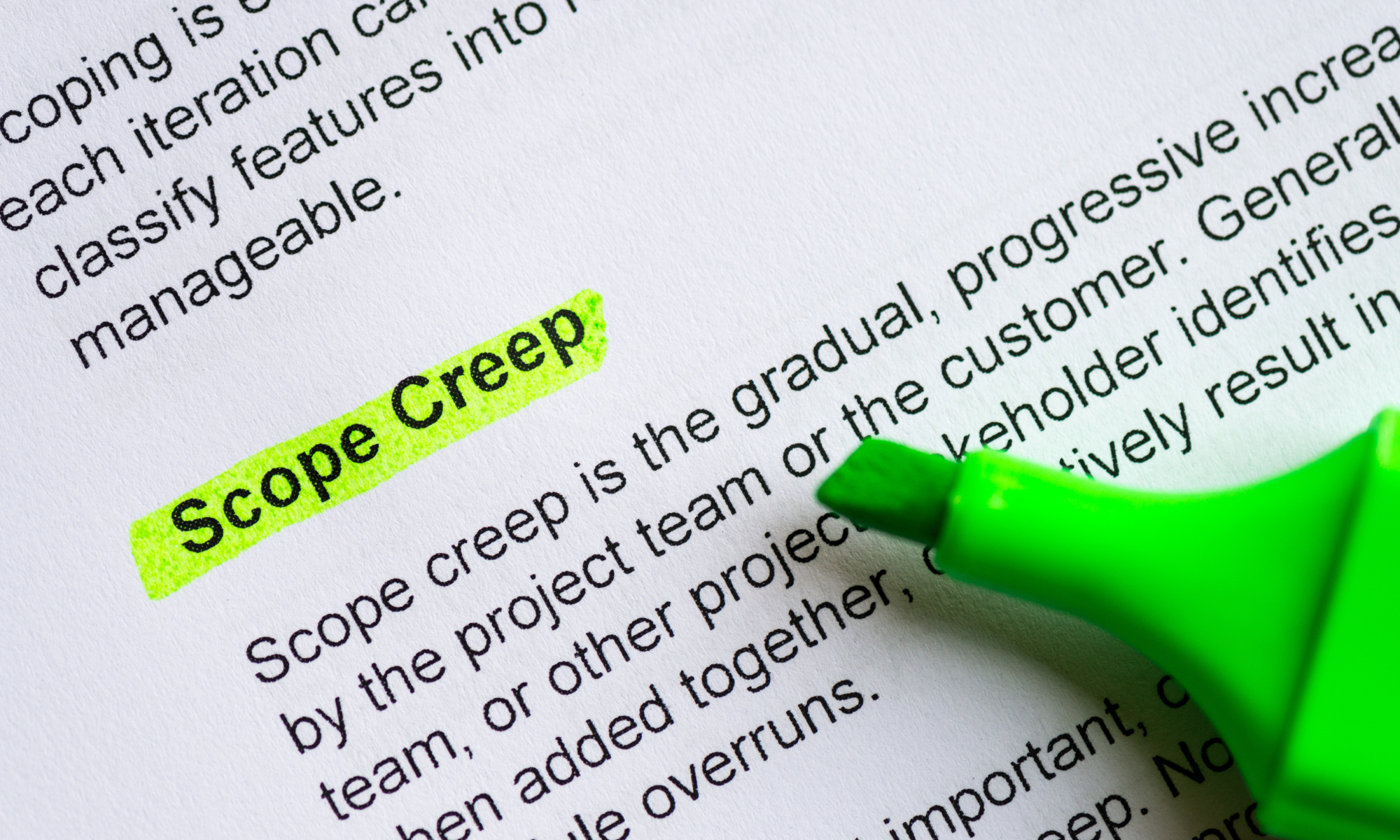
What is Scope Creep in Architecture?
Scope creep occurs when additional services, design revisions, or project requirements are added after a project has begun, without corresponding adjustments to fee, schedule, or contract terms.
In architecture, this often shows up as:
- Additional design iterations beyond those agreed upon
- Expanded programming or space changes after design approval
- Requests for added consultant coordination
- Increased meetings or stakeholder reviews
-
Late introduction of additional funding sources, each with their own requirements and review processes
- Construction‑phase services exceeding the original agreement
In simple terms, scope creep happens when the architect’s workload increases, but the contract does not.
Why Scope Creep is so Commong in Architectural Practice
Scope creep is especially prevalent in architecture because projects evolve over long timelines and involve many decision‑makers.
Common causes include:
Incomplete or Vague Scopes During Contracting
Early proposals often rely on assumptions. When deliverables, number of revisions, or construction‑phase responsibilities are not clearly defined, expectations can drift.
Clients Refining Their Vision Over Time
Many clients do not fully understand their needs at the start. As drawings develop, they see possibilities they had not previously considered and ask for changes.
Regulatory and Jurisdictional Requirements
Planning boards, zoning officials, and building departments can introduce new requirements that were not predictable at contract signing.
Construction Realities
During construction, unforeseen conditions, contractor questions, and value engineering efforts often pull architects into additional work beyond basic construction administration.
Culture of Over‑Accommodation
Architects are problem solvers by nature. The instinct to be helpful can lead to absorbing extra work without formal discussion.
Scope Creep During the Design Phases
Scope creep during design often appears quietly, disguised as minor revisions or “quick changes.”
Typical examples include:
- Multiple redesigns after schematic design approval
- Program changes after design development has begun
- Requests to explore additional design options outside the original scope
- Expanded presentation or visualization requests
- Additional consultant coordination due to client‑initiated changes
Each individual request may seem reasonable. Collectively, they can add weeks of unpaid effort.
How to Manage Design-Phase Scope Creep
1. Define Deliverables Clearly. Specify (and quantify, where appropriate) what is included at each phase, such as number of design options, revision cycles, and presentation level.
2. Tie Changes to Phase Milestones. Make it clear that approvals close one phase before the next begins. Reopening decisions affects schedule and fee.
3. Document Requests in Writing. Even informal changes should be summarized in an email or meeting note.
4. Use Additional Services Language. If a request exceeds the agreed scope, identify it as an additional service and describe its impact.
Scope Creep During Construction Administration
Construction‑phase scope creep is one of the most challenging areas for architects, especially when roles are misunderstood.
Common examples include:
- Excessive shop drawing review beyond normal expectations
- Contractor errors requiring repeated rework
- Designing solutions for means and methods issues
- Extensive value engineering redesign not tied to architect error
- Increased site visits beyond those defined in the agreement
- Acting as a mediator in disputes outside architectural responsibility
These tasks often arrive with urgency, making it harder to pause and assess contractual implications.
How to Manage Construction-Phase Scope Creep
1. Clarify CA Roles Upfront. Define site visit frequency, response times, and limits of responsibility in th econtract. Often times, some of this information will be outlined in the front end of the project’s specifications.
2. Track Time Carefully. Construction-phase services add up quickly. Time tracking provides objective data if scope discussions arise.
3. Separate Error Correction from Added Scope. Clearly distinguish between architect-caused revisions (i.e. something that wasn’t particularly worked out/detailed/determined by the time design had been finished) and client or contractor-driven changes.
4. Use Written Architect’s Supplemental Services. If construction changes require significant redesign, document them formally.
Is Scope Creep Good or Bad in Architecture?
Scope creep is not inherently a bad thing. Change is unavoidable in architecture. What matters is how it is handled.
When Scope Creep Is Harmful
- Fees are consumed faster than anticipated
- Staff workloads increase without compensation
- Schedules compress due to late changes
- Architects assume risk beyond their contractual role
- Client relationships suffer due to unspoken frustration
Unmanaged scope creep often results in burnout and reduced project quality.
When Scope Creep can be Positive (and still be Scope Creep!)
In architecture, some amount of scope creep is inevitable. Design is inherently iterative. Each round of refinement can improve function, clarity, or aesthetics, and many projects are genuinely better because changes were made along the way.
That does not mean those changes are not scope creep.
Examples include:
- Additional iterations that meaningfully improve the design
- Changes that resolve issues before construction
- Evolving client goals that result in a stronger project
- Adjustments made collaboratively and transparently
All of these can be positive outcomes, but they still represent work beyond the originally defined scope.
The danger comes when architects mentally reclassify this work as “not really scope creep” simply because the project improves. Architecture could always be improved with one more option, one more study, or one more coordination pass. Given unlimited time, every project could be endlessly refined.
But architects are not paid for unlimited iterations.
The purpose of defining scope is not to limit creativity. It is to put boundaries around time, effort, and compensation so that iteration remains intentional rather than infinite, and so that the project actually finishes!
When changes are discussed, documented, and approved with corresponding adjustments to fee or schedule, scope creep becomes a managed decision rather than a silent expectation. That distinction is what protects architects from that burnout while still allowing projects to evolve.
How to Document and Control Scope Creep
Documentation is the architect’s strongest protection!
Use Written Change Descriptions
When a request arises, summarize in an email:
- What is being requested
- Why it differs from the original scope
- The anticipated impact on fee and schedule
Reference the Contract Consistently
Point back to specific sections of the agreement that define basic services versus additional services.
Update the Scope When Changes Are Approved
Once a change is accepted, issue an amended scope or supplemental service agreement so expectations remain aligned.
Final Thoughts: Managing Scope is Part of Good Architecture
Scope creep is not a failure of professionalism. It is a reality of complex design and construction processes.
The real risk is silence. When architects quietly absorb changes, projects drift and resentment builds.
By clearly defining services, documenting changes, and addressing scope shifts openly (as soon as they come up!) during both design and construction, architects protect not only their fees, but also the quality of their work and the integrity of the profession.
Good architecture requires flexibility. Successful practice requires boundaries. The balance between the two is where strong projects and sustainable firms are built.
P.S. This space is for you, so I want to make sure I’m addressing the things you actually need help with. I’ve linked a quick 10‑question survey below to learn more about where you’re getting stuck. Or, if you’d rather, email me anytime at caroline@checkthedrawings.com – I genuinely want to hear from you.