
There’s a moment, usually somewhere between lacing up your boots and stepping out of the car, when it hits you: this is real!!!
That set of drawings you’ve been sketching, modeling, and tweaking late into the night? It’s ACTUALLY GETTING BUILT! Holy crap. Your first site visit as a young architectural designer is equal parts exciting, intimidating, and unforgettable.
If you’re heading out to a construction site for the first time, you might be wondering what to expect, and how not to look completely out of place. In my case, I kept saying to myself, “don’t say anything that’s going to make you look like an idiot, Caroline.”
The good news? Everyone was new at some point. The even better news? With a little preparation and the right mindset, you can turn your first visit into a truly valuable learning experience.
Let’s walk through it together.
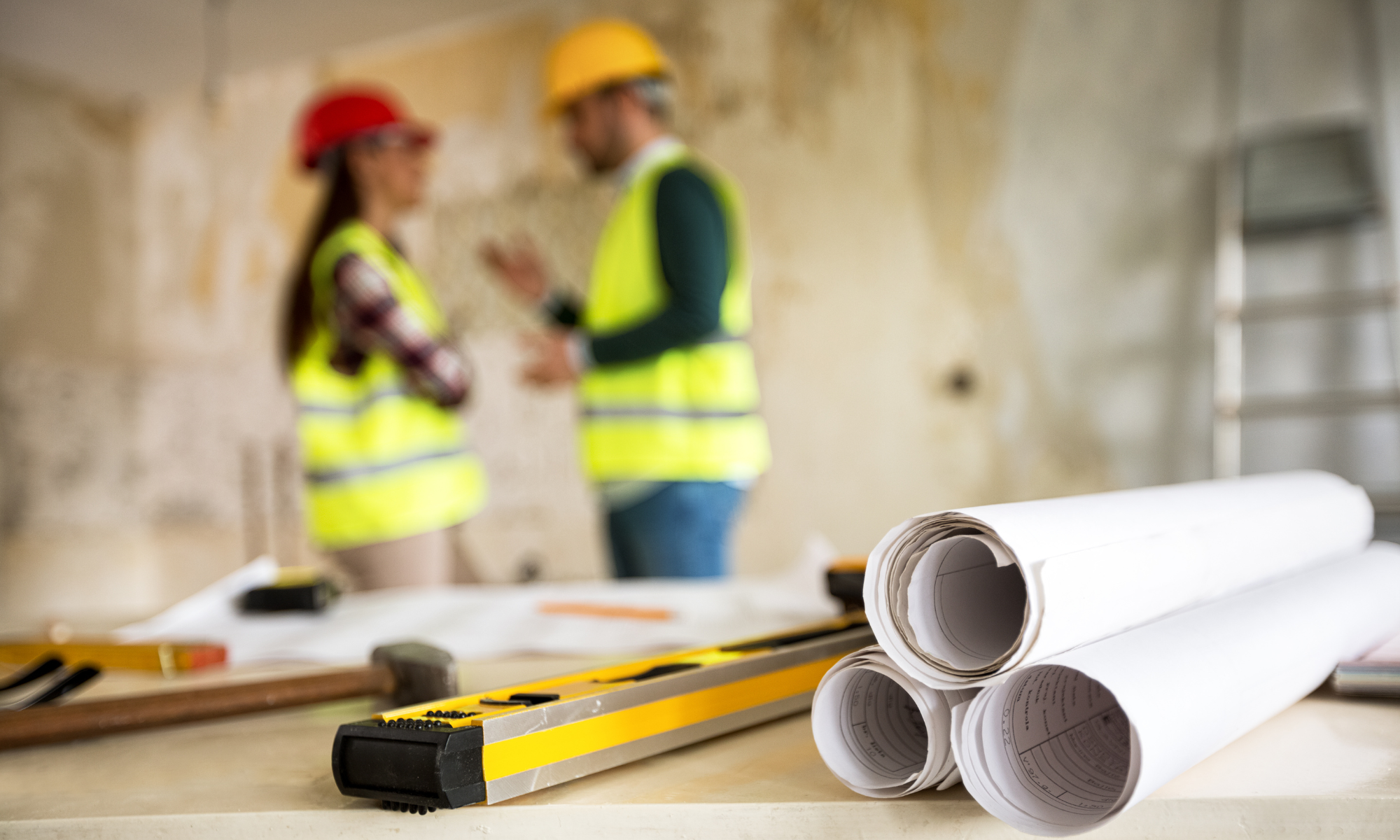
First Things First: Safety is NOT Optional
Before you even think about design details, construction sequencing, or impressing the project manager, remember this: a construction site is an active, potentially hazardous environment.
You’ll likely be required to wear basic personal protective equipment (PPE), which usually includes:
- A hard hat
- Steel-toe boots
- A high-visibility vest
- Safety glasses (in some areas)
Pro Tip: If you know your first site visit is coming up, ask your firm for these items. In most cases, there is a budget for PPE items for each employee and for things like steel-toe boots that are specific to your size, you could get reimbursed for making that purchase.
Showing up prepared sends a strong message that you respect both the site and the people working there.
Also, don’t wander off on your own. Sites can change daily. Open trenches, unsecured materials, or overhead work can pose risks. Stay with your host or site supervisor and follow directions closely.
(DON’T LET THIS HAPPEN TO YOU: One time, I was poking around while waiting for the site supervisor to give me a progress tour. Because I drew the drawings, I understood the layout of the renovation, but what I didn’t know was the contractor had installed some temporary walls and doors in order to contain the construction in the occupied building. The construction locks on the doors let me get through the doors initially, but then I wasn’t able to get back on the other side without a key! And – of course – I didn’t have cell service at this particular project site, so I was trapped!! Talk about embarrassing…)
What You’ll Notice Right Away
Your first impression might be sensory overload! Construction sites are loud, busy, and often chaotic compared to the clean, controlled world of drawings.
Things you might notice:
- Materials stacked in unexpected places
- Temporary structures, scaffolding, and equipment everywhere
- Workers moving quickly and communicating efficiently, sometimes loudly
- The building looking nothing like your renderings yet
And that’s okay.
Construction is messy by nature, especially in early phases. One of the biggest adjustments you will make is learning to see through the mess and recognize progress (or problems needing to be resolved before getting too far!).
The Gap Between Drawings and Reality
This is where the learning really begins.
On paper, or screen, your lines are crisp, dimensions are perfect, and everything aligns beautifully. On site, things shift. Conditions vary. Materials behave differently than expected.
You might notice:
- Slight deviations from your drawings
- Field adjustments made by contractors
- Unforeseen conditions, including existing structures or weather impact
This isn’t failure. It’s reality. Architecture is not just design; it’s problem-solving in real time. Watch how contractors adapt. Listen to conversations.
Don’t be afraid to ask questions!! You will gain insights that no textbook or software can teach you. Most contractors will recognize that you’re new to the gig and will take the time to explain what’s going on.
How to Prepare Before You Go
A little preparation goes a long way in building up your own confidence!
Review the drawings
Spend time with the latest set, especially plans, sections, and details relevant to the site’s current phase. Know (generally) what should be happening so you can compare it with what is happening, when you get there.
Understand the schedule
Where is the project in the construction timeline? Foundation? Framing? Finishes? This helps you set expectations and focus your observations.
If the schedule isn’t clear, ask the contractor for an update. This is a very typical thing to discuss during regular OAC (Owner-Architect-Contractor) meetings, and the contractor should be updating the construction schedule regularly for the Architect and the Owner.
Bring the essentials
- A notebook, or tablet
- Pens and pencils
- A printed or digital set of drawings
- Your PPE
- A phone or camera for photos, if allowed
Write down questions ahead of time
You don’t want to rely on memory once you’re immersed in the site. Having a short list helps you stay focused.
On Site: How to Conduct Yourself
You don’t need to have all the answers (far from it!). But how you carry yourself can matter.
Be observant first, talk second
Take time to watch and listen. Construction professionals have deep expertise, and there’s a lot to learn just by paying attention.
Ask thoughtful questions
Good examples:
- “How did you decide to approach that detail in the field?”
- “Is that adjustment typical, or specific to this condition?”
Avoid interrupting critical work or slowing down crews during busy moments.
Be respectful
Construction sites rely heavily on coordination and efficiency. Respect everyone’s time and role. A positive attitude goes a long way in building relationships.
Pro Tip: I’ve often seen egos get in the way of progress. Some people just have to be the one who’s right, instead of working together to find the best solution. DON’T BE THAT GUY/GAL!
Take notes and photos
Document what you see, especially anything that differs from the drawings. These observations can be incredibly useful back at the office. You can NEVER take too many photos!! Take all the photos.
The Emotional Side: It’s Okay to Feel a Bit Out of Your Depth
Let’s be honest, your first site visit can feel humbling.
You may realize:
- You don’t fully understand how something is built
- Your details look different in reality
- There are gaps in your technical knowledge
That’s not a weakness. It is the beginning of growth!
Every experienced architect has had that same moment of realization. The difference is that they kept showing up. Treat your first visit as the start of a long, ongoing education. It’s super exciting! This is the real stuff!
Turning Observation into Growth
Once you’re back at your desk, upload your photos to your firm’s server and create a field report to document your visit. Your firm will likely have an office standard for these processes.
You can also reflect on your visit, inwardly, by asking yourself:
- What surprised me?
- What details were built differently than expected?
- What would I draw differently next time?
- What questions do I still have?
Bring these insights into your future work. Maybe you adjust a detail for constructability. Maybe you coordinate more closely with consultants. These small shifts add up quickly in your development as a designer.
A Few More Pro Tips (You’ll Thank Yourself Later)
- Wear clothes you don’t mind getting dusty (or muddy boots!)
- Arrive early – it shows professionalism and gives you time to get oriented before additional parties arrive (i.e. the Owner, if the site visit is also serving as a construction/OAC meeting)
- Check the weather; sites don’t pause for rain or cold
- Keep your phone charged for photos and communication
- Follow up with a quick ‘thank you’ to anyone who guided you on site
Final Thoughts
Your first site visit is a milestone, one that bridges the gap between design and reality in a way nothing else can.
It’s where your drawings gain weight, texture, and consequence. It is also where you begin to understand that architecture is deeply collaborative, shaped just as much by the people building it as the people designing it.
So go in curious. Go in prepared. And give yourself permission to learn.
Because one day, you will be the one walking a new designer through their first site visit, smiling, remembering exactly how it felt, and saying, “Don’t worry… it all starts to make sense soon.”
P.S. This space is for you, so I want to make sure I’m addressing the things you actually need help with. I’ve linked a quick 10‑question survey below to learn more about where you’re getting stuck. Or, if you’d rather, email me anytime at caroline@checkthedrawings.com – I genuinely want to hear from you.